Black King Snake Latin Name Blue Ridge Mountains


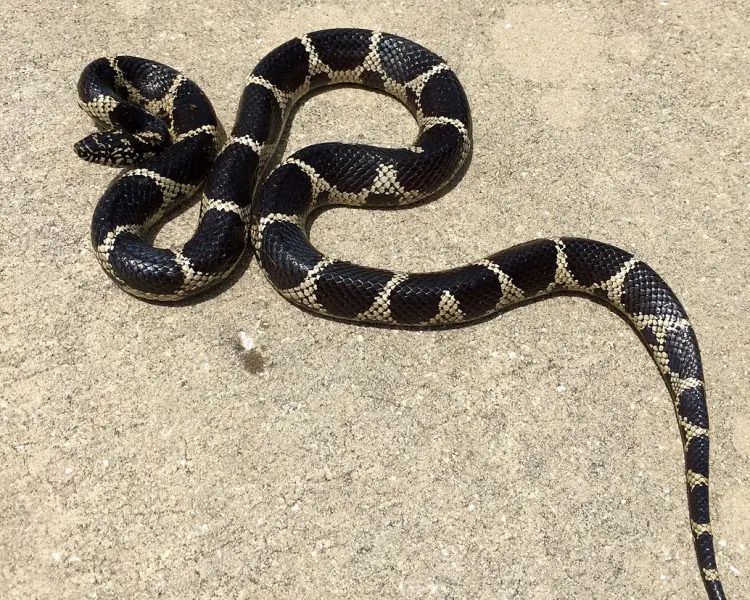
Eastern Kingsnake
Common kingsnake, Chain kingsnake, Kingsnake, Carolina kingsnake, Chain snake, Bastard horn snake, Black kingsnake, Black moccasin
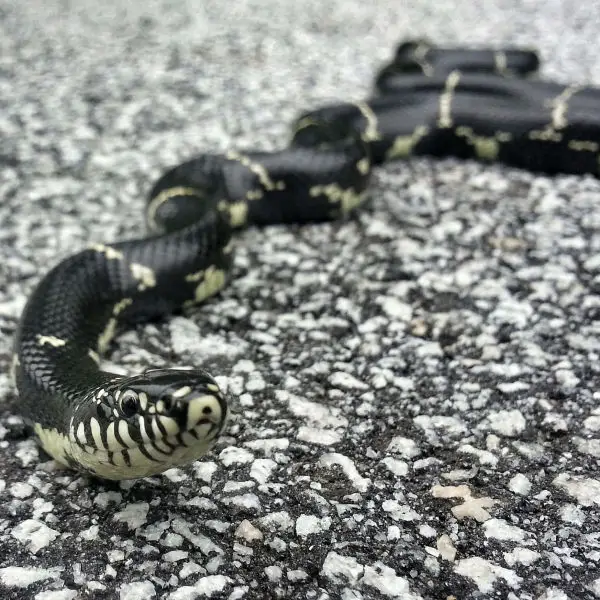
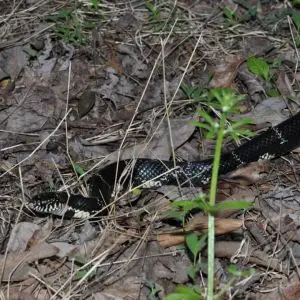
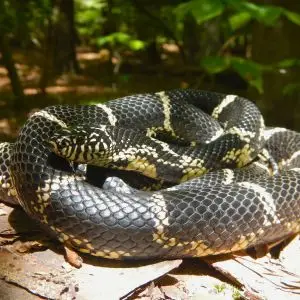
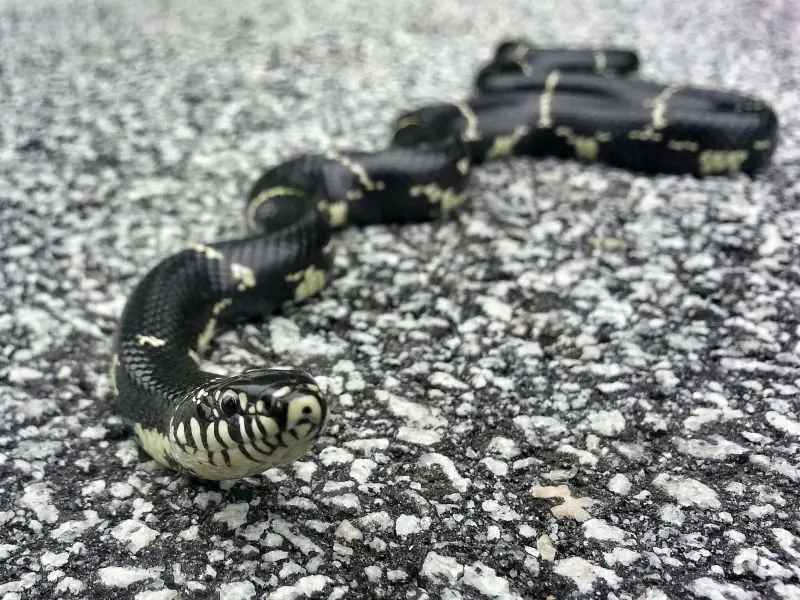
Eastern kingsnakes are favorite among collectors harmless snakes native to the United States and Mexico. Their color pattern consists of a glossy black, blue-black, or dark brown ground color overlaid with a series of 23-52 white chain-like rings. Kingsnakes from the coastal plain have wider bands, while those found in mountainous areas have thinner bands or may be completely black.
Photos with Eastern Kingsnake
View 13 more photos of Eastern Kingsnake
Video
Distribution
Geography
Eastern kingsnakes are found in the United States and Mexico. In the United States, they occur in Alabama, Delaware, Florida, Georgia, Maryland, New Jersey, North Carolina, South Carolina, and Virginia. These snakes prefer to live in open areas, particularly grassland, but also chaparral, oak woodland, abandoned farms, desert, low mountains, sand, and any type of riparian zone, including swamps, canals, and streams.
Biome
Climate zones
Habits and Lifestyle
Eastern kingsnakes are solitary and diurnal reptiles. They spend their day hunting, traveling, basking, or resting under leaf litter. During hot summer days, they may switch to nocturnal activity. These snakes live on the ground but may also climb trees and swim if needed. During the winter they hibernate in caves or rock crevices, abandoned burrows of other mammals, or in hollow logs. Eastern kingsnakes can eat venomous snakes. They have developed a hunting technique in which they avoid being bitten by clamping down on the jaws of the venomous prey; however, even if bitten, they are immune to the venom. Eastern kingsnakes have many predators and they have developed various defensive techniques. When threatened they hiss and vibrate their tail to mimic rattlesnakes. They may also roll into a ball hiding their head in the coils and play dead, produce a foul-smelling musk or strike.
Diet and Nutrition
These are carnivorous reptiles. They eat other snakes, including venomous snakes but also amphibians, turtle eggs, lizards, and small mammals.
Mating Habits
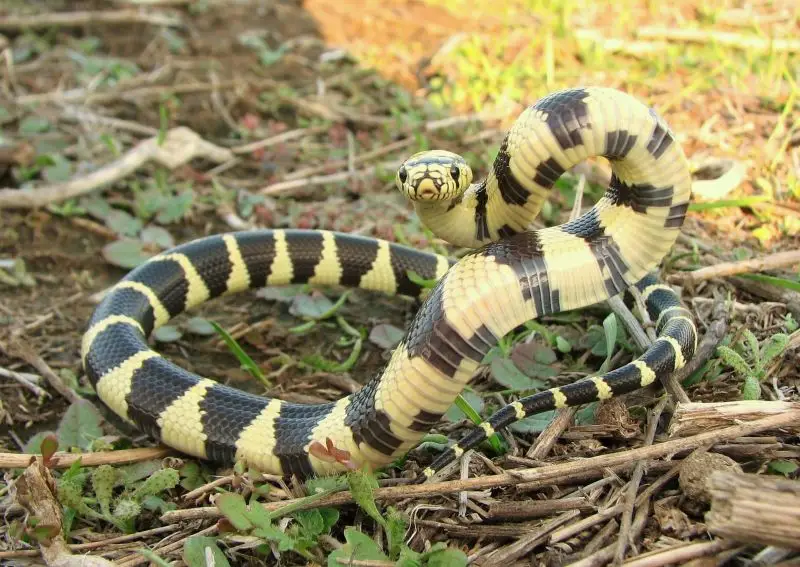
Eastern kingsnakes have a polygynandrous (promiscuous) mating system in which both males and females have multiple partners. They breed from March to August and during this time males compete with each other for females. Females may produce more than one clutch in a single breeding season which consists of 4 to 20 eggs. The eggs are usually laid in an abandoned burrow, moist soil or under a log where they are incubated around 60 days. After that the female leaves her clutch and never returns back. Baby kingsnakes are born fully-developed; they are brightly colored and weigh around 9-14 grams. Females usually become reproductively mature at 2-4 years of age while males attain maturity and are ready to mate when they are 1-4 years old.
Population
Population threats
Eastern kingsnakes don't face any major threats at present. However, they are favorite among collectors and extensive pet trade may influence some populations. In some areas of their range, these snakes also suffer from habitat loss due to intensive urbanization and agricultural development. They are also often killed because of fear.
Population number
The IUCN Red List and other sources don't provide the number of the Eastern kingsnake total population size. Currently, this species is classified as Least Concern (LC) on the IUCN Red List and its numbers today are stable.
Ecological niche
Eastern kingsnakes are very important for their ecosystem as due to their diet habits they help keep populations of their prey species in balance including rodents, frogs and venomous snakes. Eastern kingsnakes are also prey for larger snakes and other local predators.
Fun Facts for Kids
- Other common names of this species include Common chain snake, cow sucker, Eastern kingsnake, horse racer, Master snake, North American kingsnake, Oakleaf rattler, Pied snake, Pine snake, Racer, Rattlesnake pilot, Thunder-and-lightning snake, Thunderbolt, Thunder snake, wamper, Wampum snake. Also In North Carolina, it is called the Pied piper.
References
More Fascinating Animals to Learn About
Source: https://animalia.bio/eastern-kingsnake
0 Response to "Black King Snake Latin Name Blue Ridge Mountains"
ارسال یک نظر